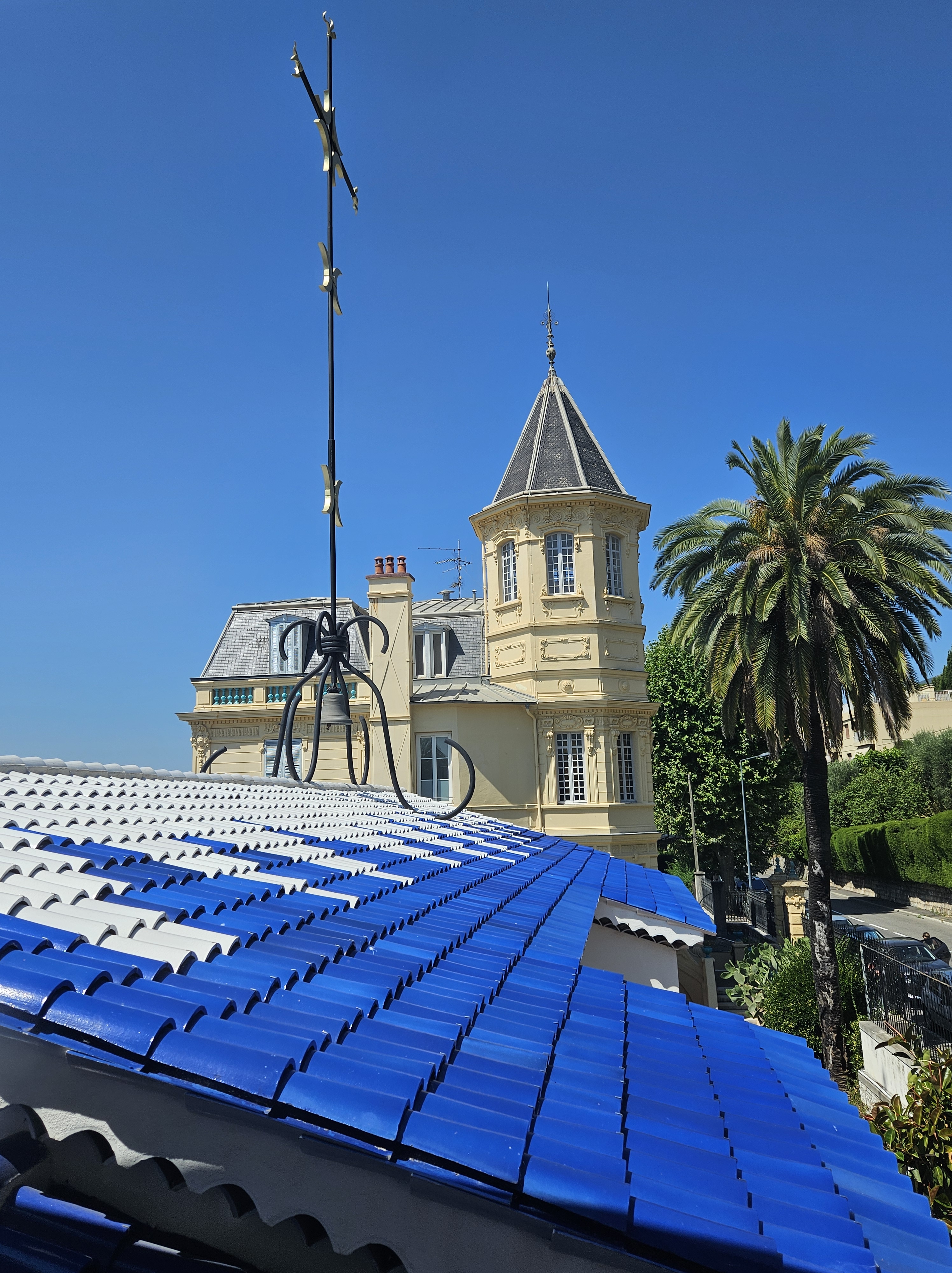
On a hillside above Vence in the South of France sits a small, white chapel. It has glittering blue tiles on the roof, a large cross and bell, and stands next to a convent for the Dominican Sisters of Vence. When I arrived a couple of weeks ago, the black wrought iron gates to the chapel were wide open. This was a very different experience to the one Sylvia Plath had when she visited in 1956, just four and a half years after the chapel had been blessed.
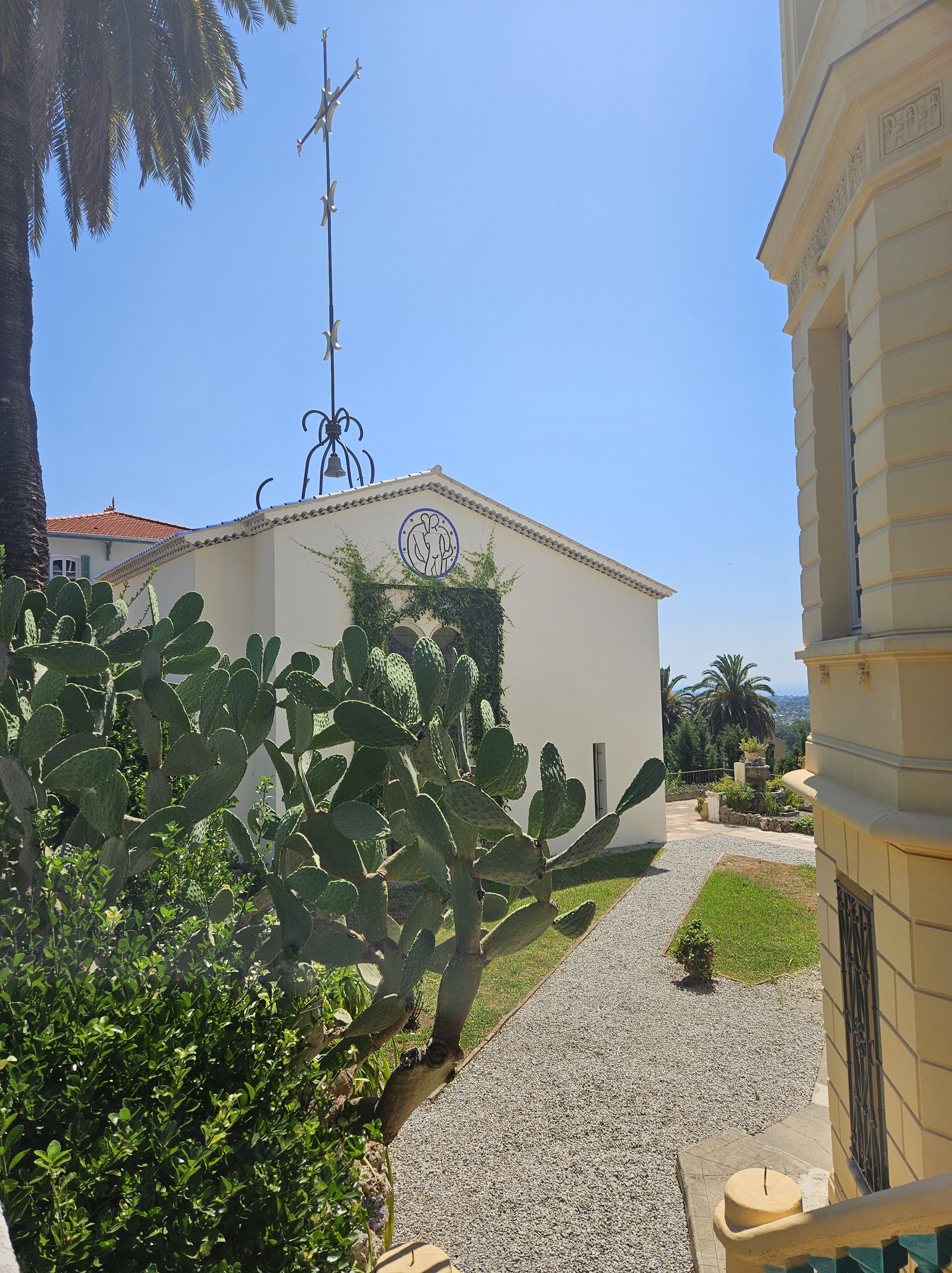
Between 1948 and 1951 Henri Matisse committed himself to the design of every aspect of this chapel — architectural detail, drawings, stained glass windows, sculptures, furniture, and church vestments. This was in gratitude for the care he had received from one of the Dominican sisters when he had been ill some years earlier. The results are astonishing; pristine white walls, cool in the afternoon sun, greens, blues, and yellows of leafy stained-glass windows pouring light across the floor and walls. The tall, thin windows look out across a small garden filled with fragrant bougainvillea.


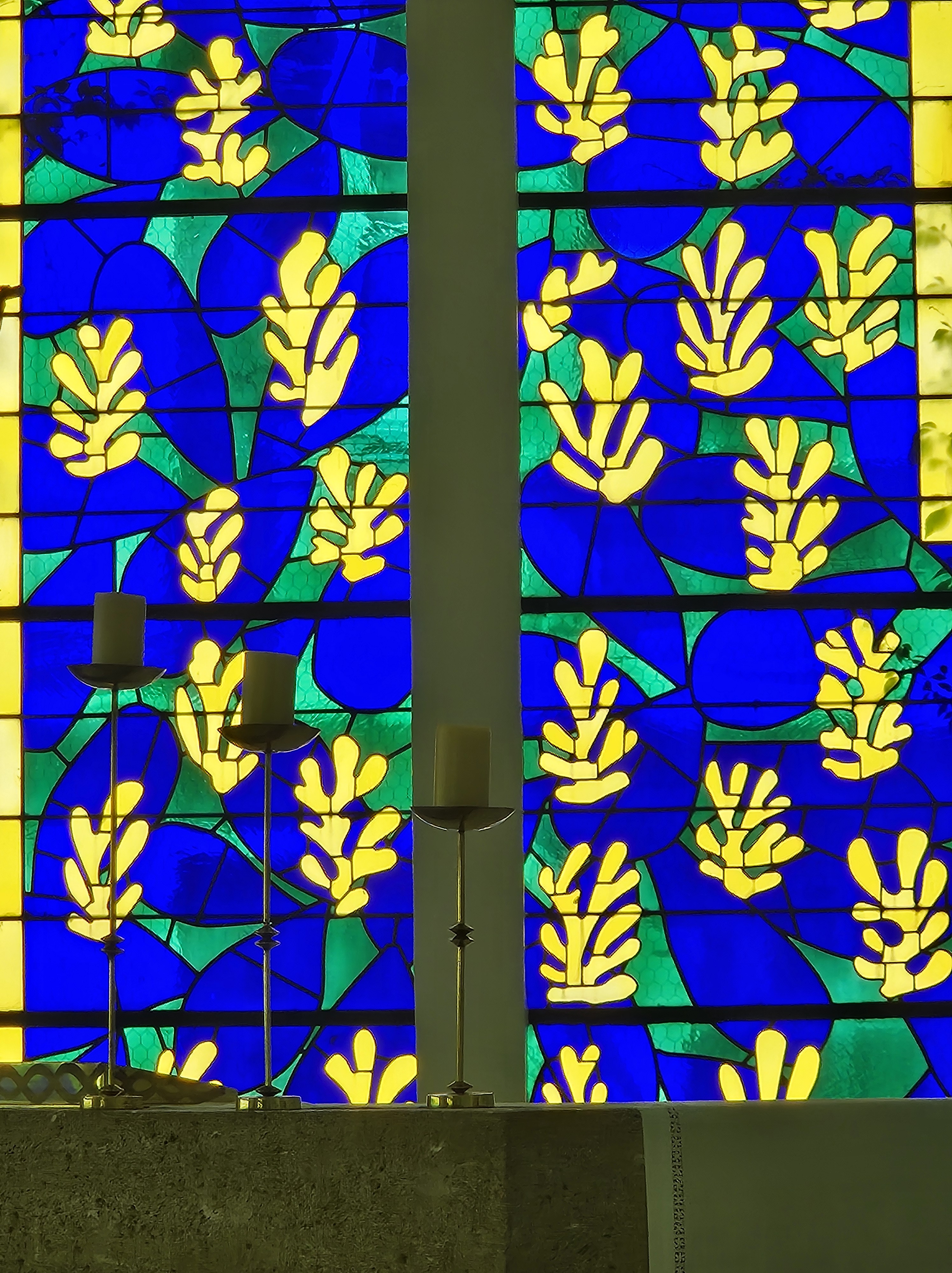


In 1955, Sylvia Plath’s boyfriend, Richard Sassoon sent her a December copy of a glossy magazine called Illustration which ran a feature on the Matisse Chapel. Plath fell in love with the accompanying photographs and the Mediterranean light that “shafted from the leafily-colored pattern of the stained-glass windows.” She immediately planned to visit as soon as she crossed the Atlantic to study at Cambridge University.
On January 6, 1956, travelling on a Lambretta scooter from Nice, Plath arrived at the gates of the Matisse Chapel eager to see inside. Finding the black iron gates padlocked, a passing local informed her that the chapel was only open two days each week. Feeling, in her words, “desolate”, she wandered to the nunnery next door and sketched a corner of the chapel before walking back to the front. Pressing her face against the locked bars of the gates, she began to cry, writing on a postcard to her mother, “I knew it was so lovely inside, pure white, with the sun through blue, yellow & green stained windows.”
Then, a miracle. A nun appeared and told Plath to stop crying, she would show her the chapel. Plath “knelt in the heart of the sun & the colors of sky, sea & sun in the pure white heart of the chapel.”
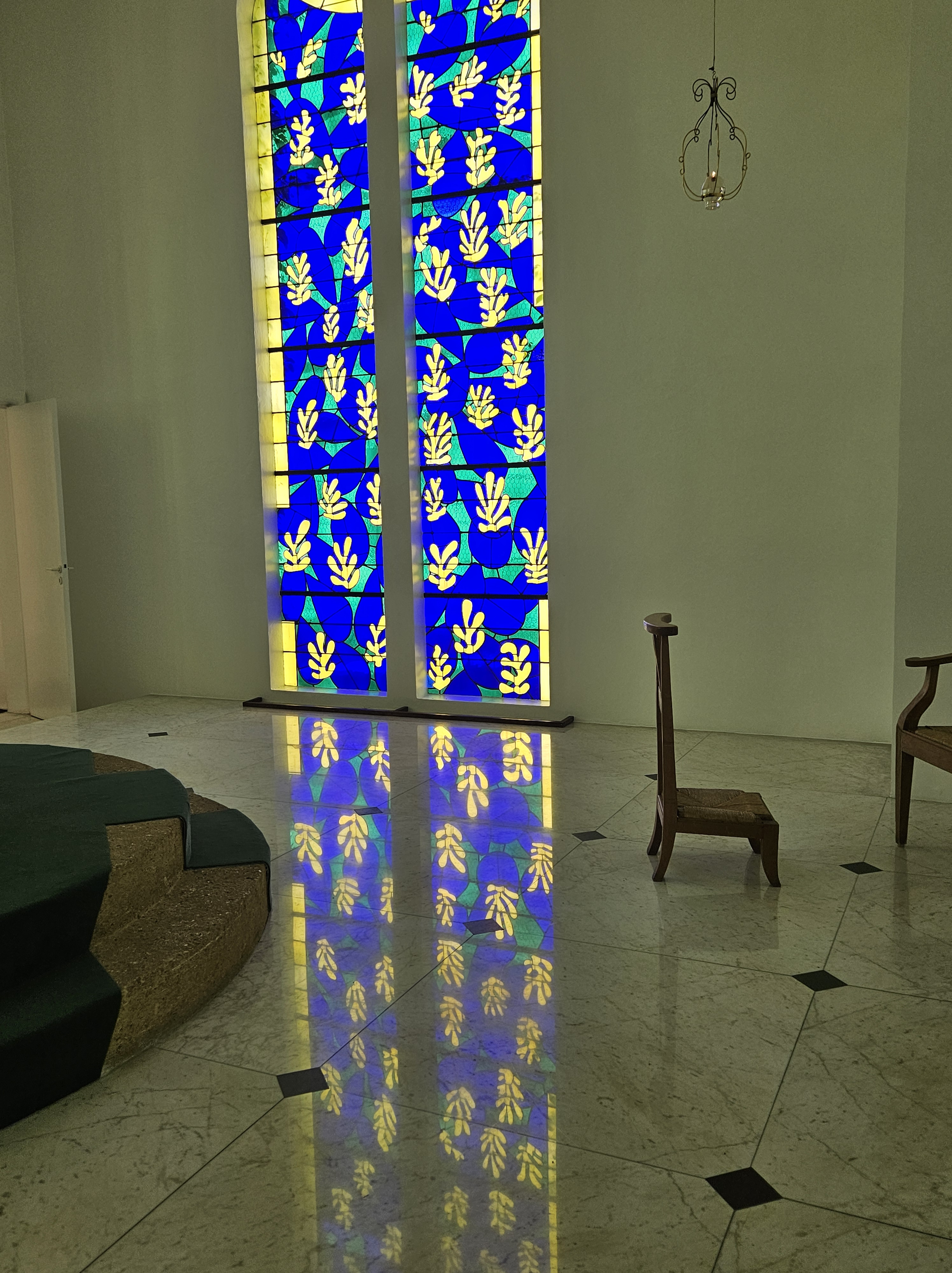
Later that year Plath would write a 25-page story about this visit called “The Matisse Chapel” wanting first to adopt a New Yorker voice, but if that failed, then a Ladies‘ Home Journal style piece. It remained unpublished in her lifetime despite containing quite lovely descriptions of Matisse’s work.
Matisse himself said, “Despite all of its imperfections, I see it (the chapel) as my masterpiece…It is the result of a life devoted to seeking the truth.” By using the play of colours and lines, he gave the small chapel “the dimensions of infinity.”
When I left the heart of all that colour, I walked to take a look at the convent next door and to see the side of the chapel that Plath had sketched. The roof-tiles glittered blue in the fierce afternoon sun, the palm trees barely moving in the heat of the day. By the time I returned to the black iron gates, they were now closed, with a large padlock wrapped around the iron bars.

[All photographs copyright Gail Crowther]
 gail crowther