‘Is my life so intriguing?/Is it for this you widen your eye-rings?’: Sylvia Plath, conflict, and privacy

Letters_2_Rosenstein_Archive

In recent weeks a new collection of Plath material was advertised for sale, owned by Harriet Rosenstein, an early Plath biographer. The archive consists of Rosenstein’s research notes, recordings of people she interviewed for her book, and unseen photographs of Plath (provenance as yet unknown). However, other material included in the sale were the coroner’s report from Plath’s inquest, medical notes from Plath’s stay in McLean Hospital after her first suicide attempt in 1953, and letters written to her therapist, Dr Ruth Beuscher, between the years 1960 – 1963. The hospital notes were stolen by Beuscher from McLean who eventually handed them onto Rosenstein.

In recent days the British media have picked up on some of the content of these letters (which were previously thought destroyed), namely allegations of domestic abuse by Ted Hughes. Some articles link one instance of this happening to just two days before Plath miscarried their child in 1961. There are so many issues to consider here that it leaves one a little bewildered.

However, what this media attention has highlighted, yet again, is the extent to which Plath is a cultural figure who unnerves and challenges. There are issues about conflict, access, and privacy.  Should somebody be allowed to sell hospital notes that were stolen? Should readers be able to access the private correspondence between a therapist and her patient? Do the dead have any rights at all? What consideration do we have to give to surviving family members and those drawn into Plath’s story? How soon is too soon to publish personal letters and journals? Should they even be published at all? These are ethical questions that constantly trouble scholars and readers of Plath, and there are no easy answers.

Perhaps first of all it may be helpful to unpack the media framing of this new material which has certainly inflamed the situation. Knowledge that there was physical violence in the Plath/Hughes marriage is not new at all. In fact it is already there in her published journals, mostly graphically when she describes a fight on her last day teaching at Smith College in 1958 (pages 386-392). But also prior to the marriage too after a night spent together in London in March 1956 (p. 552). For those of us who have been privileged enough to work in the archives there is more evidence. The University of Maryland holds the papers of Plath’s American editor Fran McCullough. In her notes she recounts a visit to Devon in the mid-1970s when she found herself showing Ted Hughes a manuscript of Letters Home and observing his reaction to reading it. According to McCullough, he left the room, upset, and then later drove her out for dinner and made the claim that Plath had a ‘demonic side’ like ‘black electricity’ that would explode. McCullough writes:  “He said he used to try slapping her out of her rages but it was no good. And once she turned into his slap and got a black eye and went to Drs and told him that Ted beat her regularly. But then as it began to heal she decided it looked dramatic and began to mascara the other eye to match.” There is a lot of information to unravel here, but what we do have is a direct admission from Hughes that he hit Plath and then his subsequent justification and negotiation about how he dealt with that (for example, blaming Plath herself for ‘turning’ into his slap and apparently ‘liking’ the look of her black eye). While the ethical dimensions of domestic violence are straightforward (it’s wrong and unacceptable), the details of personal relationships are not.  By this I do not mean to negate the power an abuser has over the person they abuse, or that the violence within the Plath/Hughes marriage did not cause Plath considerable distress. Of course it must have done. But in 1961, as today, women find themselves situated in a cultural and historical moment that does not care about them. They exist and struggle within a society and within institutions that make escaping such relationships difficult to say the least. That a man may physically abuse a woman is one demonstration of power, but it would be a lot less powerful if women found it easier to escape. Structurally nothing is on their side to walk away. In this sense testimony becomes important and women’s voices need to be heard. In 1961, Plath would have become a single parent living in a rented flat in London with no stable job or income. In 1962 when the marriage finally did break down and she was then left the single mother of two children, she was upset that the villagers in Devon speculated she had never been married in the first place because she received so much mail addressed to Sylvia Plath, not Mrs Hughes. Yet it was exactly these structures and attitudes that Plath attacked in her writing. Her journals are a long consideration of societal double standards. The Bell Jar depicts vividly and with razor-sharp commentary on what it was like to be a young woman negotiating life in 1950s America. Plath’s Ariel poems, a direct response to her disintegrating marriage, bristle with resistance to, and fury about, physical, psychological, and emotional abuse. Plath was not silent. She has never been silent, though at times she has been silenced.

This silencing has been justified in a number of ways – issues of privacy and taste, consideration for those who her words may affect. Female anger makes certain people uncomfortable. Critics refer to Plath as ‘shrill’ and ‘hysterical’ – gendered language to say the least. However, in my research, one of the overwhelming positive features that readers gain from Plath is her openness about her personal experiences. The genius of Plath is that she used this to universalise, so reading a Plath poem is not like reading a diary entry, but it is about emotions that at some stage may affect us all, situations that we may all experience. Plath is a source of strength for many of her readers. One response to this could well be, just because Plath gave us these poems, does it give us the right to read her personal correspondence? It’s a powerful question and raises many issues about access, privacy, and rights. First, the archive tells us that Plath certainly had an eye for publishing her own letters at some stage in the future. We can’t fully know which letters and how many, but the evidence is there. Second, once someone is dead, then that decision falls elsewhere. With Letters Home, it was Plath’s mother; with the first edited Journals it was Ted Hughes, and with the unabridged Journals, Plath’s children Frieda and Nicholas. The forthcoming complete Letters to be published in two volumes by Faber necessarily has the support of Frieda Hughes (she owns The Estate of Sylvia Plath, the letters could not be published without her sanction). So, as scholars and readers, can we be guided by this? If Plath’s daughter supports the publishing of her mother’s letters should we feel okay to read them? It is a slippery path to negotiate and I do not know what the answer is, or even if there is one. Readers may remain divided about this. As a researcher who has spent many weeks in Plath archives, there are times when I have felt very uncomfortable. It can feel invasive. I wonder what Plath would make of it all. I constantly unearth things that I would not dream of publishing. Some stories feel too soon, others too disruptive for people who are still alive. But they are my own ethical boundaries. Luckily, however, archives are permanent. The material is not going anywhere and so the stories can be told at any time.

As a female cultural figure, Plath troubles and agitates. This makes her powerful because she undermines those very structures that seek to put her down or silence her. When Plath is presented as just another ‘crazy woman’ she shows up societal stigma and disdain towards mental illness/health. When she is written off as a miserable, doomed, suicidal poet, she exposes all the ways in which structures, such as masculinity, patriarchy, and misogyny, try to depoliticise or write-off any female voice of resistance. That Plath ultimately killed herself does not negate any of her power. We cannot judge a life lived on a decision she made in her final day(s). That is unfair and does her a great disservice. But we can listen to her – and that is not always easy. What voice should we listen to? What voice of hers do we have a right to listen to? In some ways it feels like a mire of sticky ethical quicksand, but that is no reason to back away from it. For therein lies the beauty of Plath – she forces us to face up to these issues, unflinchingly. And in a world that badly needs female voices of resistance, that can be no bad thing.
 

Fragments of prose: traces and spaces

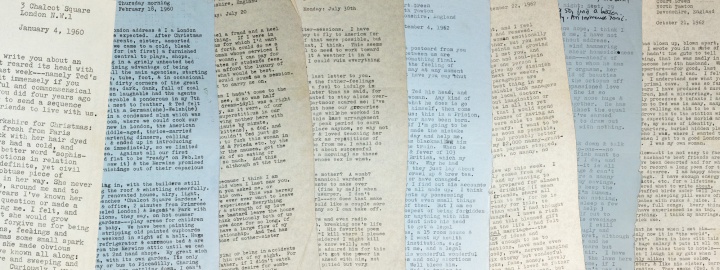
Last week I spent a few hours in The British Library exploring some newly released Plath materials from the Ted Hughes collection. Peter K. Steinberg had alerted me that material which had previously been withheld from public viewing was now available. It was described as:

HUGHES, Ted (1930-1998). Autograph Manuscript drafts for an apparently unachieved poem, five of the pages being on the versos of carbon typescript fragments of prose pieces by Sylvia Plath, undated. Autograph Manuscript draft of ‘Crow sees a movie’, undated. Creation dates: Undated

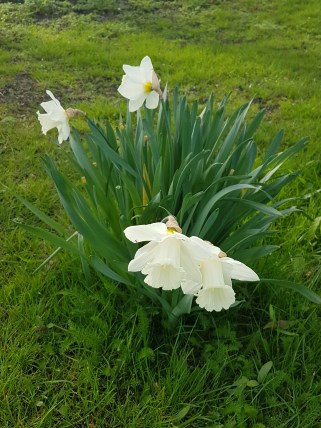
With no idea what these prose fragments might be I requested the relevant files (RP 9674) to read in the Rare Manuscripts Room. On my way to The British Library I walked across Tooting Common and saw daffodils everywhere, which seemed to be a good Plathian omen.

daffodils

It was the first real hot day of the year and the courtyard of the library off Euston Road was full of researchers stretched out in the sun.

Entering the reading room still excites me, though I have been many times now. There’s something about the hush and the desks and the concentrated silence. The fragmented manuscripts were waiting for me when I arrived. Because they are loose pages, they were contained in a thick brown envelope and had to be viewed in a large padded box. The reading room was unusually quiet.

Sometimes the archives don’t always give you what you want and this was one of those occasions. When I opened the envelope I immediately realised that I was dealing with photocopied sheets, not original documents. The five Plath typescripts were four fragmented pages of ‘Sweetie Pie And The Gutter Men’ (pages 11, 13, 16, 17). There were no discernible differences to the version published in Johnny Panic. The final page was a fragment of a piece called ‘Two Fat Girls on Beacon Hill’.  This is Plath’s clinical eye taking in and describing in uncomfortable detail a young woman sitting reading on the Embankment of Beacon Hill (Plath’s body shaming here is something else). This is page 3 of whatever Plath was working on; page 2 is held at Emory University. It has a laboured unfinished feel about it, like an exercise rather than a creative piece. Although it is undated, it most likely originates from the writing year Plath spent in Boston in 1958-1959. Since during this time she was struck with legendary writer’s block, I wonder if this was one way of her attempting to get some words down on the page. Periodically she tried to set herself a target number each day to break the mental block. It’s not her best prose anyway, but it is still fascinating to see her play with language and observe daily rituals and interactions.

BL notes 2017

It did not take me very long to transcribe the piece, two hours maximum. The provenance of these pages is unknown, as are the whereabouts of the originals. Almost always the archives can throw up such spaces. I packed away my notebook and pencils and walked out of the reading room into the dazzle of the courtyard and the sunshine.

Encountering the Archive

Since the start of this year I have been thinking and writing about archives. I have also been reading about archives – journal articles by researchers and archivists, excellent collections of essays such as Carrie Smith and Lisa Stead’s The Boundaries of the Literary Archive and general theorising of the archive by Caroline Steedman in Dust. So what I have now is a messy head of ideas that need some kind of moulding.

There are two things of which I am certain. First, that archives are about power. There is power in terms of who gets to access archives. There is power in who gets an archive dedicated to them. There is power in what gets sold to an archive and what gets withheld. I also think there can be subversive power in an archive – a place for otherwise silent/silenced voices to be heard. The second thing of which I am certain is that archives are somewhat melancholic, or at least the objects contained in them can be melancholy objects. By this I mean often the artefacts are relics of the dead, and as such, we read them perhaps already knowing the end story of somebody’s life. In the Sylvia Plath archives at Smith College, we can see the cheque stub for the gas cooker which Plath purchased on 12 December 1962 for £16:5:0. In this sense sometimes the meaning of objects becomes re-negotiated.

What I often struggle to articulate is the actual experience of working in an archive. Peter K Steinberg and I tried to capture this unique feeling in our series of papers called ‘These Ghostly Archives’- those physical shocks and jolts you can feel handling certain things. In theory, academics are supposed to remain pretty detached from this stuff and not write about such emotions, a rule which I repeatedly break. The very first archive I visited was at Peter’s request – the BBC Written Archives at Reading in England. While I was sitting feeling completely overwhelmed handling original documents, seeing Plath’s signature for the first time, following stories of poems and submissions and recordings, someone sitting behind me was reading letters from George Orwell to the BBC. I invented a spurious reason to stand up and stretch my legs so I could saunter by and casually glance at these letters. Plath and Orwell both within my field of vision at the same time. No way am I not going to get over-excited.

It’s not just the manuscripts and letters that are so moving in an archive. At Smith College I loved the childhood bits and pieces that Aurelia Plath had preserved and passed on.  Little Sylvia Plath was a delightfully creative child making cards and drawings and cartoons.

card
Homemade card signed ‘To Mother Love Sylvia 1937’

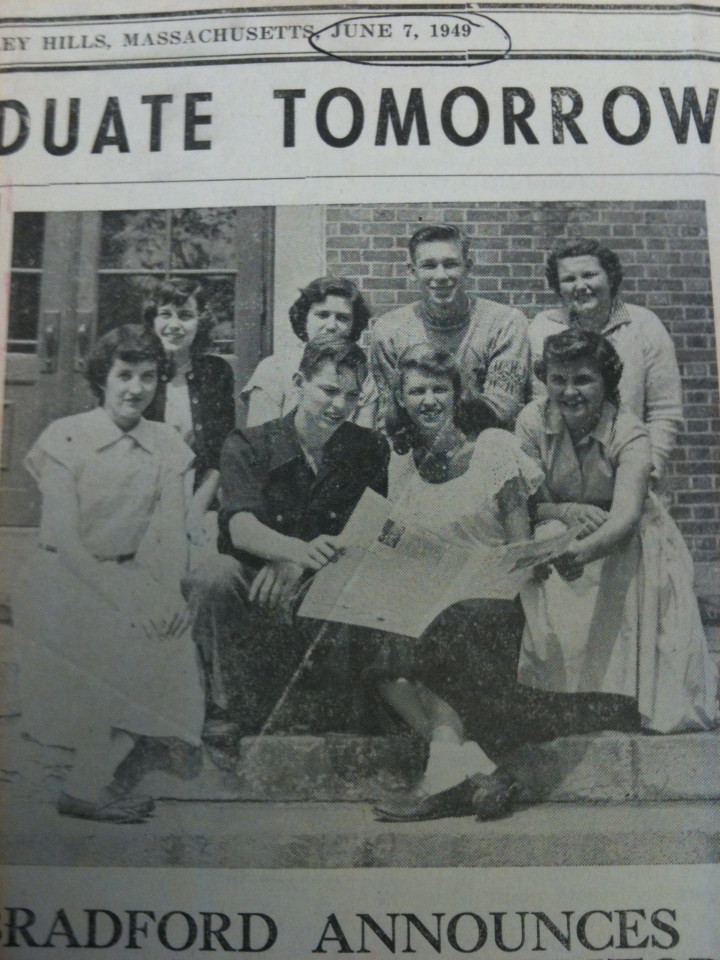
She seemed to appear often in the local newspaper which was a chance to view previously unseen photos

newspaper

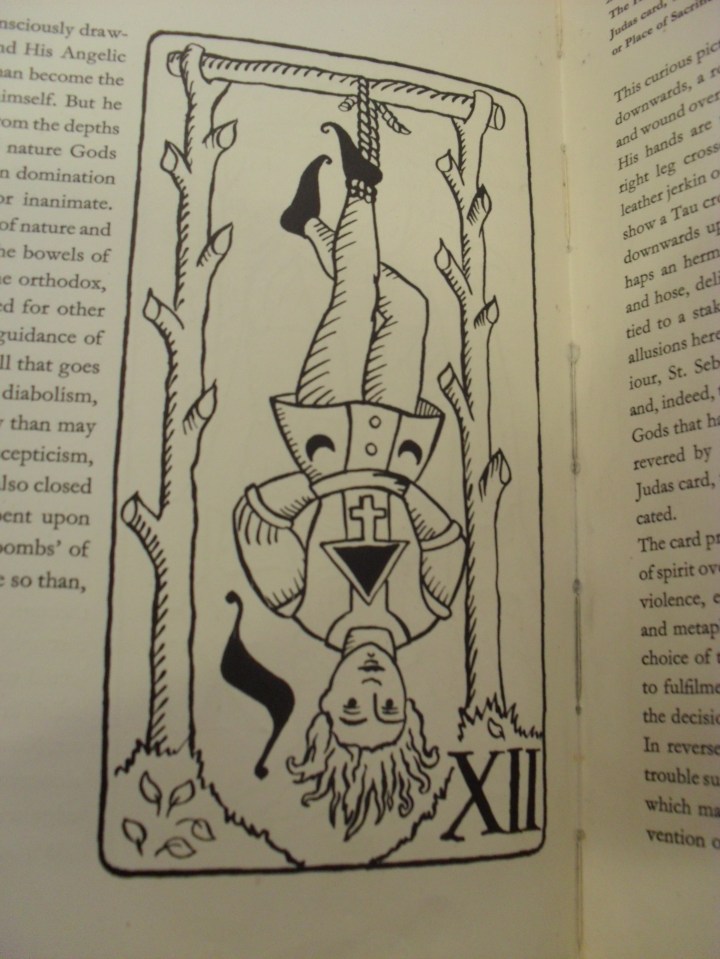
And as she matured, her personal library grew. It was fascinating to see her underlinings and comments, or images from certain books that ultimately inspired poems.

the hanging man
Image of The Hanging Man from Plath’s copy of The Painted Caravan

So while I try to sort out theoretical approaches to the archive, I don’t want to lose the experiential aspect. In a way that is the most important part because ultimately for me archives are about remembrance – re-vivification, restoration, dialogues with the dead.

The Living and the Dead

In the fog, the gravestones are just visible and it is very hard to tell what is real and what is imagination.

IMG_2328

How can something be so bright, so white and so difficult to see? The line between the living and the dead becomes blurred. How is it possible to stand at the graveside of someone long gone, yet who is so present in day to day life?

Last week as I worked on edits for my forthcoming book The Haunted Reader and Sylvia Plath, I began by asking the question ‘who’ or ‘what’ are the dead? Can they return, and if so what might they want from us, or us from them? In a curious convergence, I was also watching the last episode of the French TV series The Returned (Les Revenants) which was exploring similar ideas. Where do the dead come from and where do they go? Are they any different from the living, and if so, how? In this show, the dead looked just like the living; they loved, they ate, they felt, they laughed. In some cases they were more alive than the numbed-grief of the living. Refreshingly, the dead were not frightening, though there is something a little creepy about seeing a dead person return. They were searching and they longed for something, but were not really quite sure what that might be.

The-Returned-013

Longing or yearning is a feature of the living and the dead. The melancholic ache for someone who is gone, that ungraspable presence, the enigma of the finality, the never-can-be-ness of it all. The Returned was ultimately about resolution, letting go but experiencing a continuing presence. In this sense it seemed that the dead have nothing at all to do with silence, although Derrida claims that the dead can only speak if we choose to give them a voice. I am not so sure this is the case. I think the dead can quite happily take their place in our lives alongside us, very much there, very much becoming, by their traces and their objects and their photographs. Our memories and imagination can also leap in and create an overwhelming sense of there-ness so that it is almost like that person has not gone at all. Except of course they have, and that which we grasp onto is the very thing that causes the yearning. When there is no ‘body’ what is left? Perhaps it is a sense of kinship, or as I write in my book, the sense of a two-way door between the living and dead. Plath captures it perfectly in her poem ‘All the Dead Dears’:

All the long gone darlings: they

Get back, though, soon,

Soon: be it by wakes, weddings,

Childbirths or a family barbeque:

Any touch, taste, tang’s

Fit for those outlaws to ride home on,


And to sanctuary: usurping the armchair

Between tick

And tack of the clock, until we go,

Each skull-and-crossboned Gulliver

Riddled with ghosts, to lie

Deadlocked with them, taking root as cradles rock.

(1988: 71)

There is no barrier here, but rather a blurry intricacy in which the living and the dead become ‘Deadlocked’ in a sort of two way intersection between life and death. We cannot contain the dead and perhaps neither should we want to, but rather like the priest in The Returned, give them free rein to do what they wish and let them enrich our lives with stories, with memories and with words.

Electra on Azalea Path

There is always something to be said for tracing somebody’s footsteps. Pilgrimage, I suppose. I like making pilgrimages to poems. Partly it is about trying to see a place through somebody else’s eyes but it is also about atmosphere. Standing looking at the same scene as somebody else can produce powerful emotions. In some ways I feel it helps me understand part of the authorial process, transforming a scene or place into a poem. I feel I can take part in some sort of surrogate authorship being so fascinated by that meeting point where experience becomes text. When, say Sylvia Plath, looked at a scene, felt something at a certain place, how did this transform itself into a poem, a piece of prose, part of a novel?  What happens, what occurs at that moment?

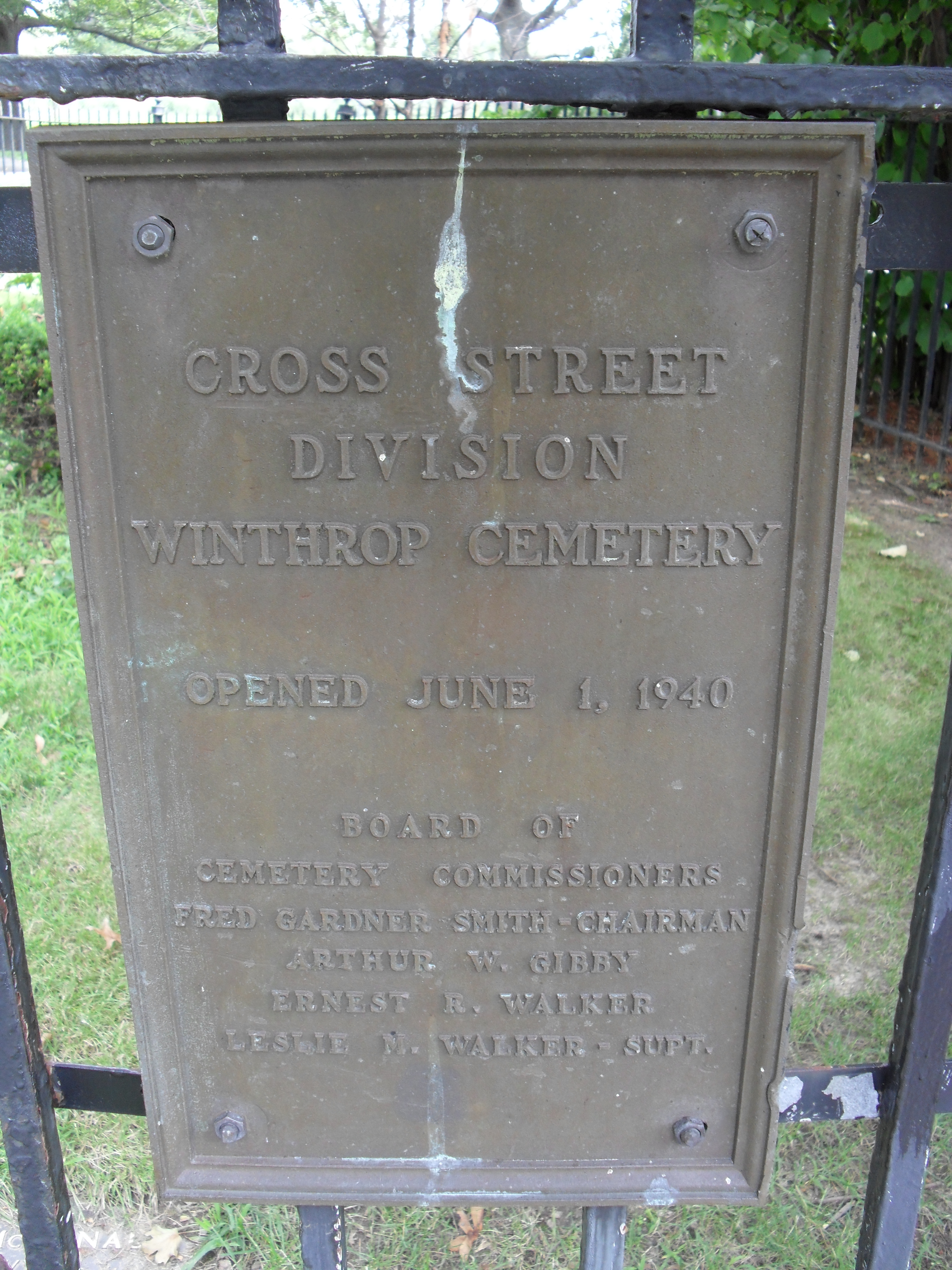
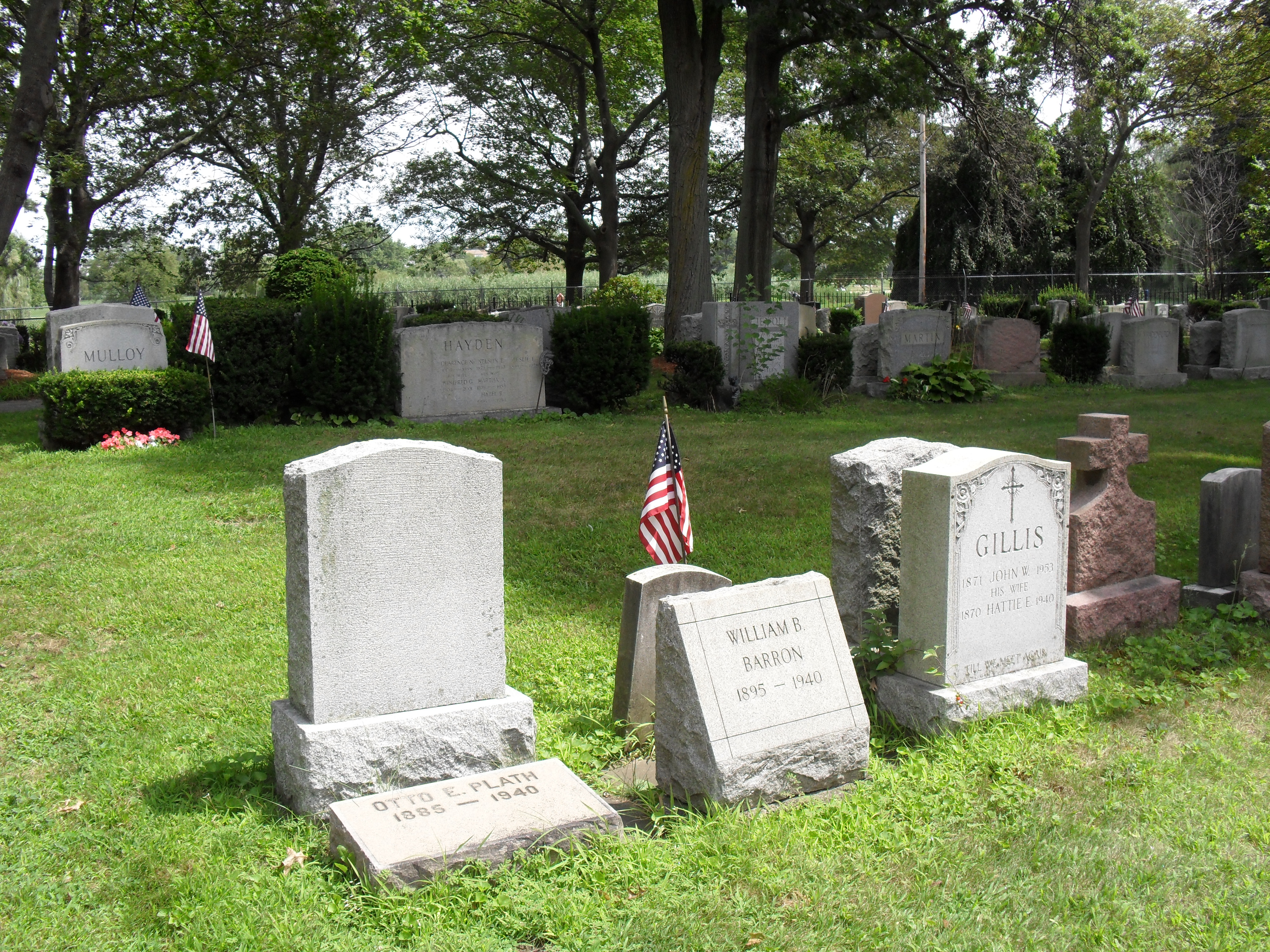
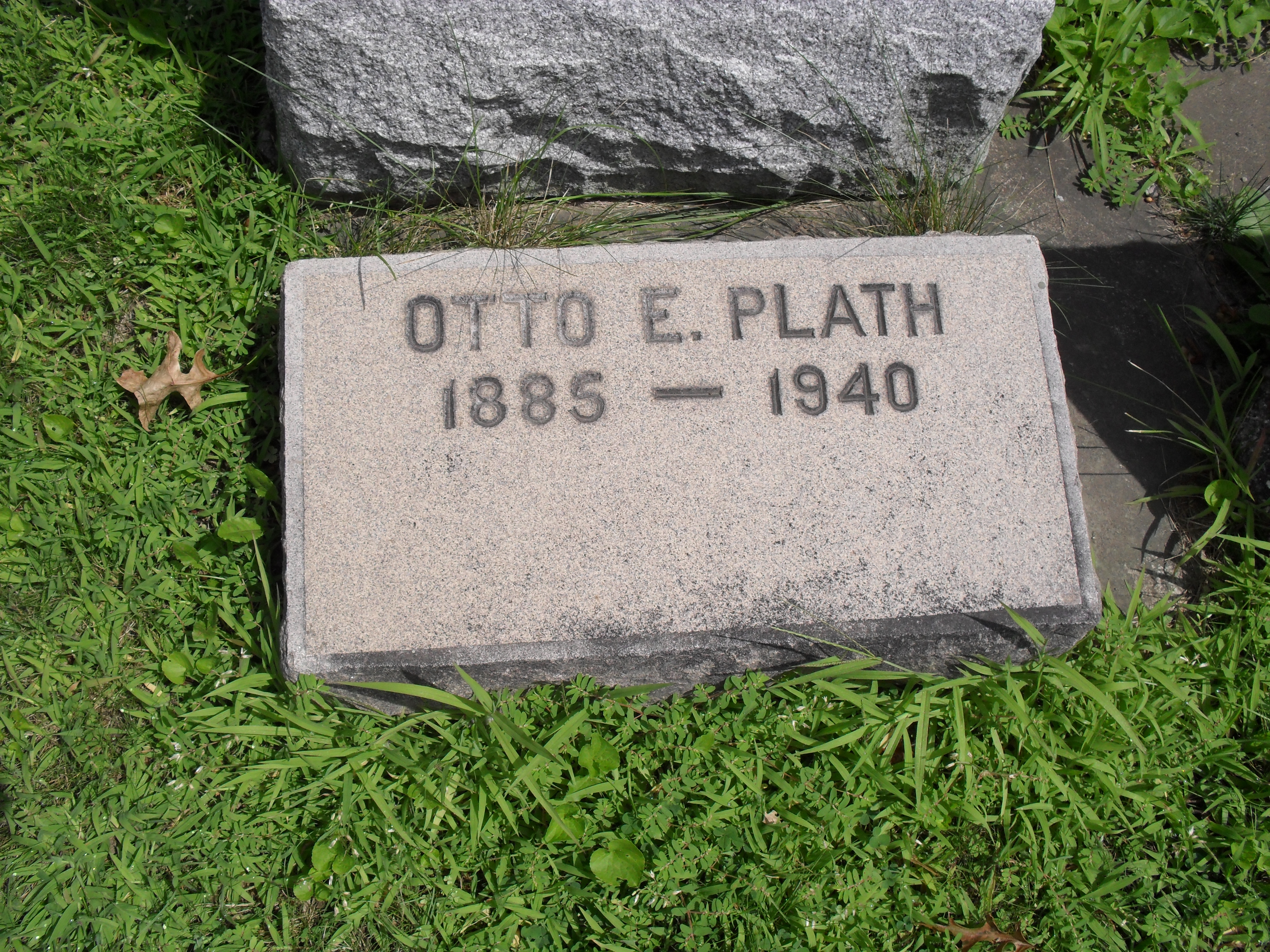
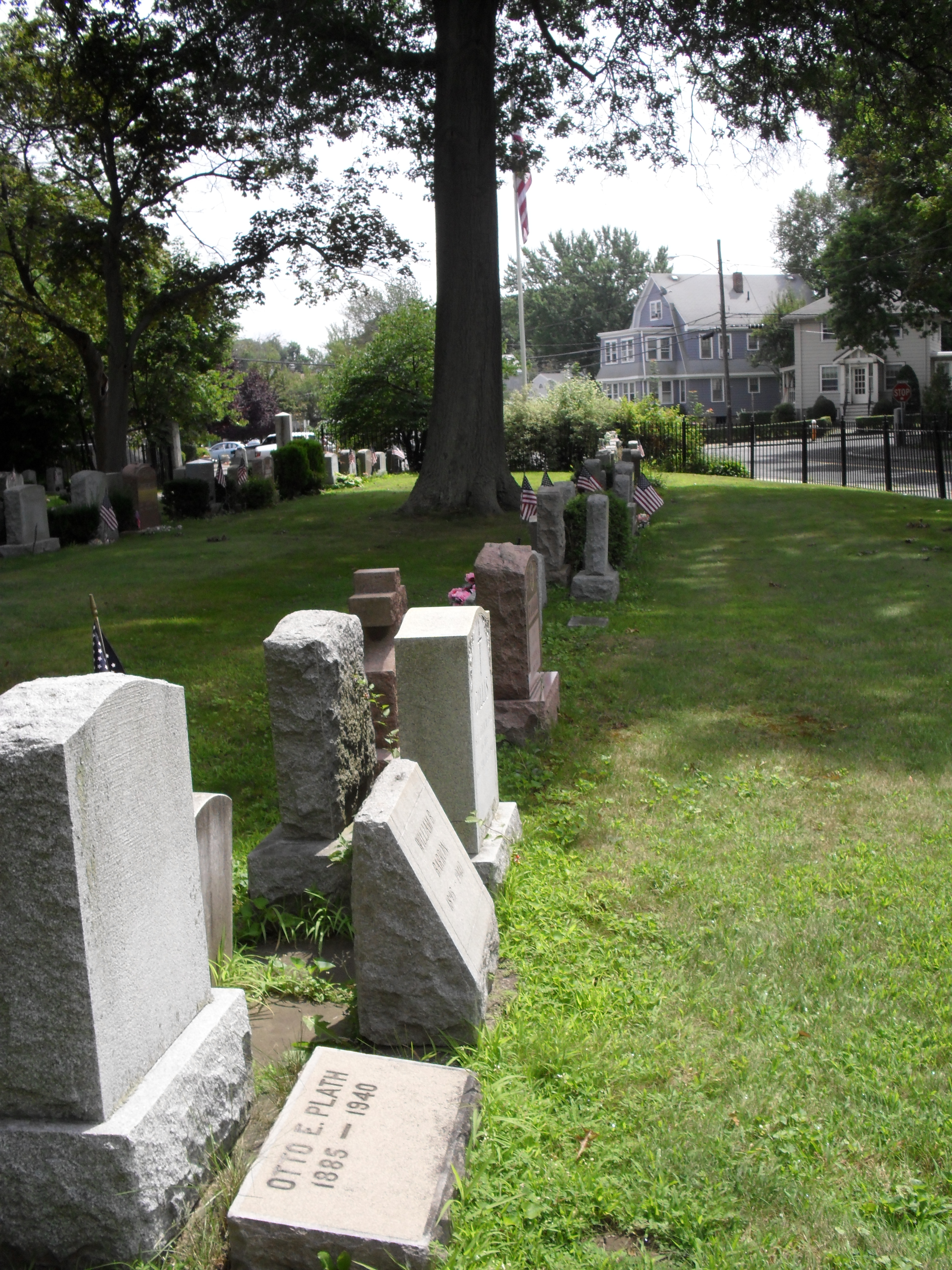
In 2011, I visited Azalea Path in Winthrop where Plath’s father is buried. Like her, I too, followed a haphazard route through three graveyards separated by streets. I stumbled unexpectedly on Otto Plath’s grave, his stone flat to the ground; missable, unedifying. When Otto Plath was buried here, the graveyard was new. The plaque on the cemetery gates states that the churchyard opened on 1 June 1940, and Otto Plath died just five months later. Is this why his grave is situated where it is, in one of the first rows? I visited this site with Plath’s poem ‘Electra on Azalea Path’ firmly in mind. I also thought about sections of the poem that linked directly to her journal account and scenes from The Bell Jar.  What occurred for Plath in 1959 on Azalea Path in Winthrop?

Winthrop 087

The day I woke I woke on Churchyard Hill.

I found your name, I found your bones and all

Enlisted in a cramped necropolis,

Your speckled stone askew by an iron fence.

(Collected Poems p. 117)

Winthrop 080

In this charity ward, this poorhouse, where the dead

Crowd foot to foot, head to head, no flower

Breaks the soil. This is Azalea Path.

(Collected Poems p. 117)


Then I saw my father’s gravestone.

It was crowded right up by another headstone, head to head, the way people are crowded in a charity ward when there isn’t enough space. The stone was of a mottled pink marble, like tinned salmon, and all there was on it was my father’s name and, under it, two dates, separated by a little dash. (The Bell Jar p. 177)

 Winthrop 079

A clear blue day in Winthrop. Went to my father’s grave, a very depressing sight…In the third yard, on a flat grassy area looking across a sallow barren stretch to rows of wooden tenements I found the flat stone “ Otto E. Plath: 1885-1940”, right beside the path, where it would be walked over. Felt cheated. (Journals p. 473)

Winthrop 081

No trees, no peace, his headstone jammed up against the body on the other side. Left shortly. It is good to have the place in mind. (Journals p.473)

Winthrop 084

This journey, of course, is about the living and the dead, the private and the public, for both Otto and Sylvia Plath and ultimately for me. I do not know what occurred for Plath on Azalea Path in Winthrop. I can guess and I can daydream. I took photographs and in the end realised that for everyone involved, it was about loss.

Staring at the Sea: Fantasy & the Disturbance of Place

I’m interested in the central paradox that we are finite, material, organic, biological beings with a finite time/space experience and yet we have this imaginative ability to overcome the horizons of our physical limitation through mental and imaginative activity; an inherent contradiction, but one that is eternally engaging. (Antony Gormley)

image 1

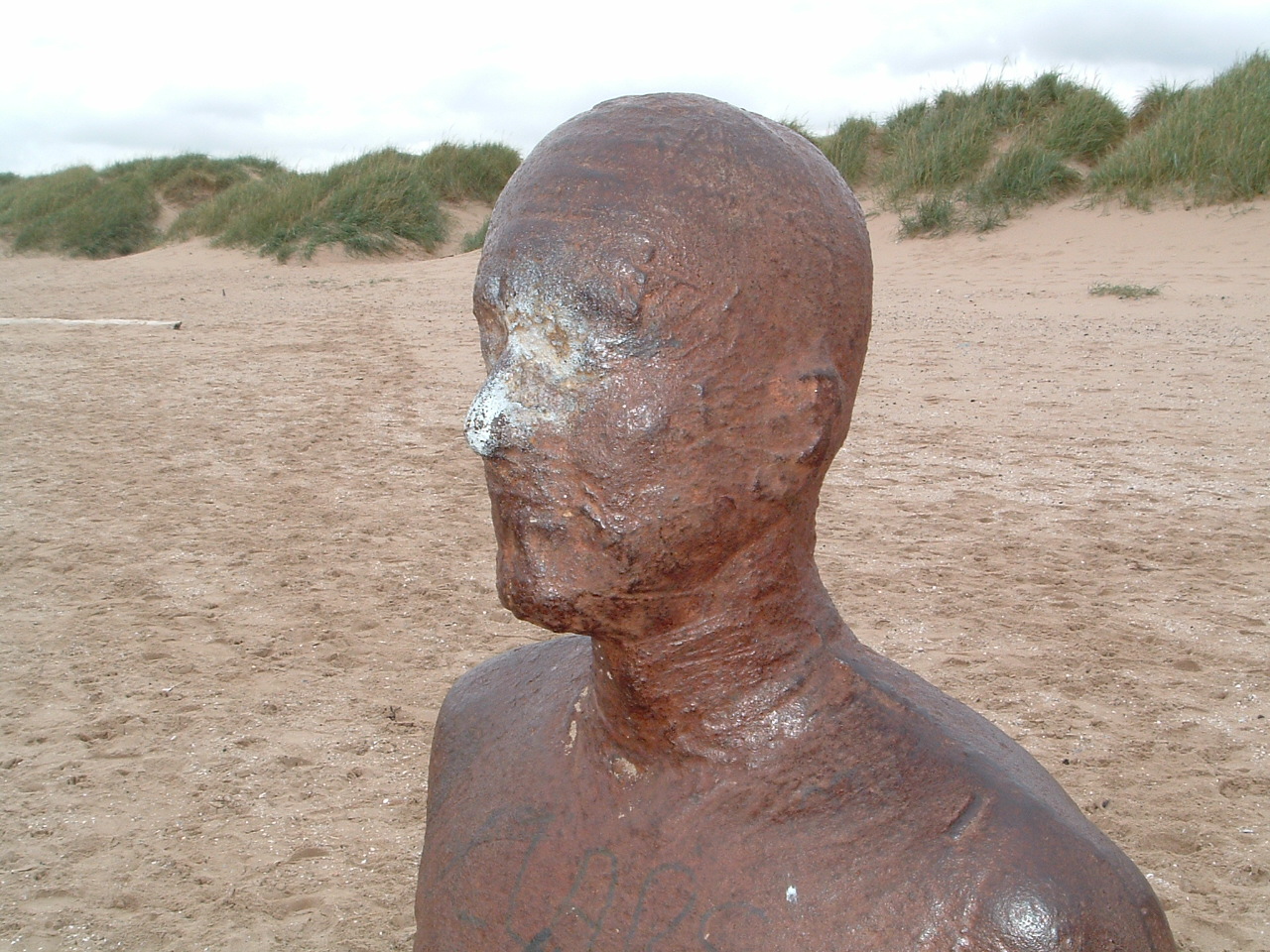
Imagine, if you will, one hundred cast iron figures standing on a beach. All are placed at different distances up and down the shoreline; all are staring out in the same direction to the horizon, across the sea, across the sand. As time passes and the tide changes, some of the figures disappear completely beneath the waves, others are waist deep and the ones furthermost up the sand stay dry. Antony Gormley’s Another Place on Crosby Beach is a fine example of a public art installation disrupting the eye space of place and exploring the use of fantasy.

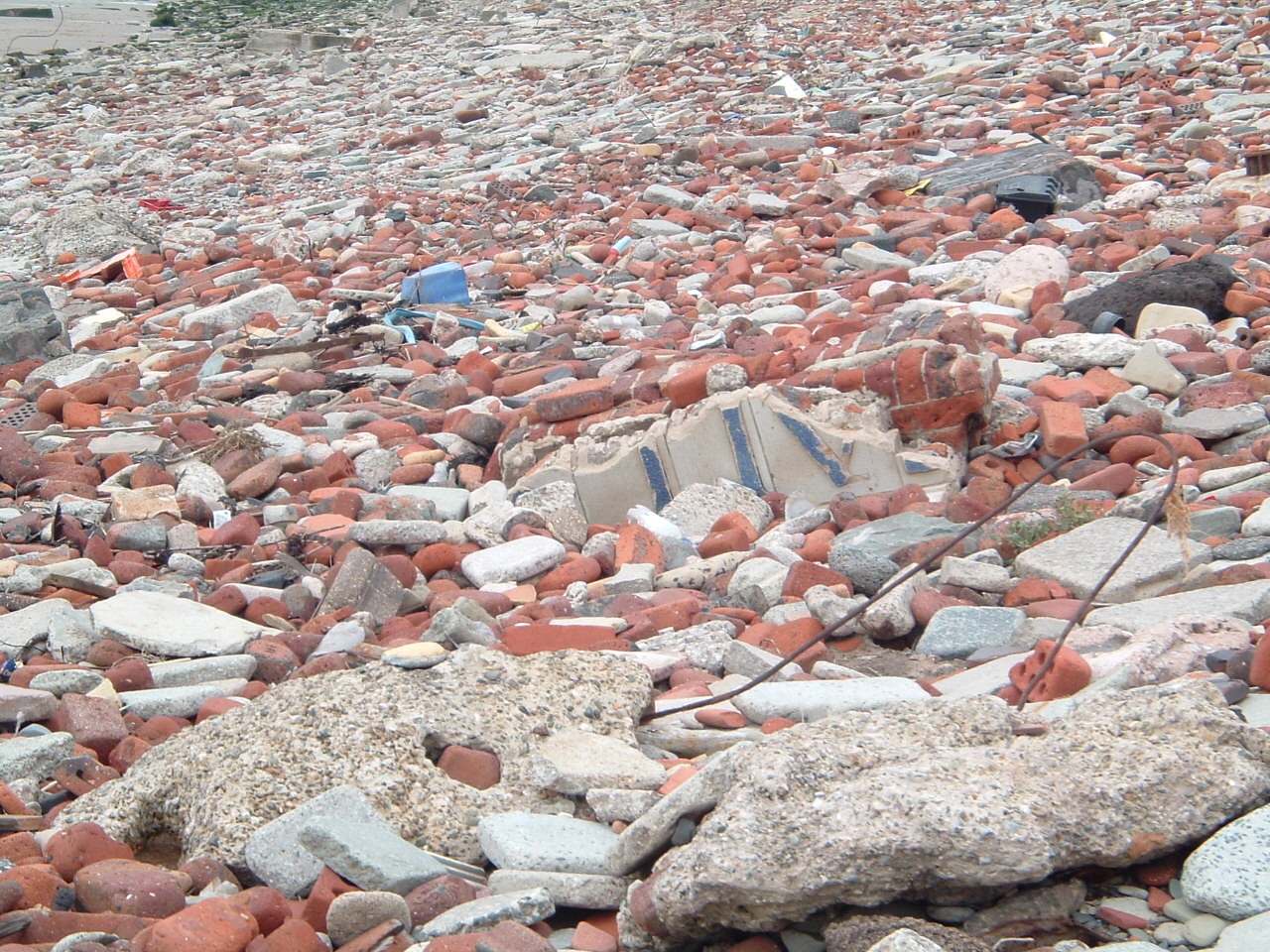
However, these figures are not alone on the beach. Less than a kilometre north, beyond the sea-side café and the small public toilets, beyond the final cast iron figure and the car park, is another, accidental and largely unnoticed art installation. For the sea defences at this point on the beach are made from smashed up buildings – old mills and industrial factories.

image 2

Fragments of a long gone time are shattered by the incoming tide. Walls, bricks and tiled signs, chimneys and windows and doorways, lay layer upon layer on the beach, their original usage long forgotten. Their very existence now, almost unnoticed. Yet this haunting of the beach by a lost industry, by ruined buildings has itself turned into something very beautiful, for these bricks are now worn and smoothed by the waves’ coming and going. Each stone, pebble and brick curved, like a fine Barbara Hepworth piece or a valuable ancient sculpture.

image 10

Tiles smooth and salty and bits of chimneys lay like immense sea sculptures, a sort of nautical spewed up art gallery. Yet seemingly no one notices. No one stops and stares or photographs this curiously natural sculpting of an industrial thing. It is the cast iron figures, the beautiful solidness of the deliberate art installation that catches our eye and our imagination. We do not stop to think upon the rubble of a time gone by, we are too mystified by the gaze of the iron men. What is it they are looking at? What is it that we are looking at?

The most striking feature of Gormley’s figures is their solidness. There is nothing ephemeral or phantom-like about them. They are there, unmoving and they stay there through time and tide. Yet within that stasis there is also change, for at any given time the figures which are subject to the air and the gaze of observers are also at another time subject to the movement of the waves and live a submerged life of invisibility. So these figures challenge the very notion of absence and presence. Depending upon time they are both there and not there and yet they do not move.

Some have speculated that this installation is about death. Certainly there is a melancholy in unmoving figures staring at the horizon, all silent, all identical. Others have argued it is about emigration, placed as it is near a port. The comings and goings of people and things and objects. The traces. Certainly this piece deals with the notion of change, for it is not just the impact that time and tide have on the figures, but also other natural elements. The rain, the wind, snow, the sea mists that creep from the sea and wrap themselves around legs and necks. So, the cast iron figures are no longer unmarked metal, but green with oxidisation and salt, a sort of metallic fungus crawling across lips and eyes.

image 4

Depending upon the shift of the sand, some are buried knee-deep, others expose the solid iron plinth they are secured onto.  Thus Another Place disjoints space and time. The figures snag the eye-scan of the beach, both in their vertical unexpectedness and their uncanny ability to transgress boundaries of visibility and invisibility at various times of the day.

The notion of change is further highlighted by the curious tags attached to the wrist of each figure. Stamped in metal is a number, seemingly in no particular order but nevertheless imprinting a sense of individuality on these identical pieces. Again we are faced with a paradoxical quandary, of something being both alike and yet different at the same time. Another Place – both here and somewhere else. Identical figures each with their own number. Are we to prescribe individual meanings to each piece? Do the numbers have significance beyond simple labelling?

image 5Gormley himself appeared to be aware that he would have little control over the interpretation, and in a way, acknowledges that this fluidity is part of his purpose when he describes his hope that the work will act like “an acupuncture of people’s dream world” so that “each person is making it again…its actually an open space that people can make their own”.

In fact, it is because of the unmanageable nature of dreams that Roland Barthes claimed;

Dreaming (whether nicely or nastily) is insipid (nothing so boring as the  account of a dream!) On the other hand, fantasising helps pass any interval of waiting, of insomnia; a kind of pocket novel you can always carry with you and can open anywhere without anyone seeing anything..” (1977:87)

Thus, the private pocket novel of thoughts and desires is ever accessible and to a certain extent controllable. Certainly what we choose to make public is within our power. So our responses to the (physically) still yet (emotionally) moving figures on the beach, waist-high in water or submerged by the waves, are open. Yet it seems, it is this very openness that creates the disturbance of place, for people must employ fantasy if the figures are to mean anything at all. For those who fail to do this, the figures are a nuisance, a health and safety issue – people may mistake them for drowning figures and drown themselves trying to save them.

Yet a mere cursory glance is enough to indicate that these solid and unmoving figures are not human. They have no body and they are not even intended to represent a body I have been interested in asking what is the nature of the space a human being inhabits. What I try to show is the space where the body was, not to represent the body itself.” (Gormley). So although the figures are casts of the artists own body, it is a body that is no longer there. It is a melancholic shell left, an absence filling the space, an absence replicating itself along the beach. More interestingly it is a solid absence that becomes animated through imagination. People visiting the statues stand next to them and stare out to sea following their gaze. What is it that they are looking for?

Further down the beach there are other questions to be asked. What is this? What was this? A messy pile of rubble half grown over with sandy reeds and beach grasses. Where did it come from? What was it used for? How old is it? We can tell it was a building once because the bricks are still there. Here are the names surviving from the brick-makers, Liverpool, Southport, the long dead industrial north sheds its grainy remains on the beach. A smashed up name is tiled into the brick.

image 7

The very names and places and people who worked in these buildings haunt the beach. Where are they now? What happened to them? To understand a ghostly story like this, is to understand how the past can be seized in an instant (Avery 1997), how a pile of rubble on a beach can blast through time and make us question that which is both there and not there, both visible and invisible. The wavey boundaries of time and space!

Industrial ruins according to Tim Edensor have long symbolised the fear that civilisations eventually crumble and that industrial ruination engenders a post-industrial nostalgia.  In industrial ruins, the gothic mingles the living (plants, insects, birds) with the dead, the disorder mocks the past production and progress and strict time keeping of the managers. Fragments of ordered space from an ordered time tumble into disuse and change their context. Yet here on Crosby Beach, we do not have ruined buildings, but buildings that have been deliberately smashed to pieces, a wrecking ball through time and space that leaves dust, bricks and a salty decay. The industrial north gone out, like the tide.

No longer housing the rush and bustle of industry, the shattered bricks now serve a different purpose defending the land from the sea. The bricks and chimneys are portable ruins that are not only changed themselves but bring change also. The beach space awash with sand and shells is suddenly invaded by a mass of ruined factories, an accidental art installation at odds with the iron figures carefully placed at intervals along the beach.   If the silent melancholy of the iron men staring at the horizon is haunting, then the smash and crumble of these once busy buildings deafens the beach with their silence.

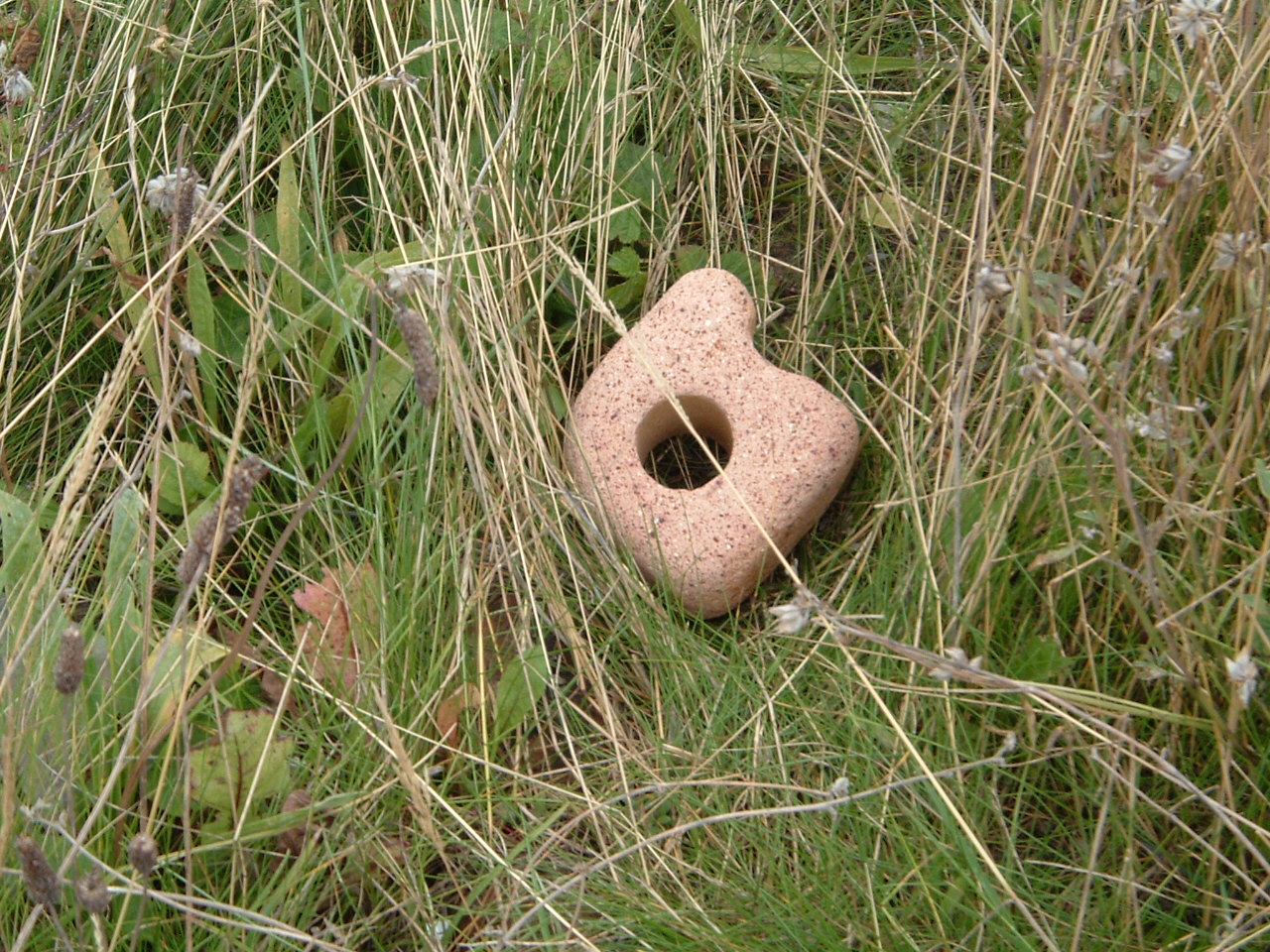
In the dune grasses the sand hoppers skip and jump. The pom-pom plants and sharp blades flatten with the sea wind. Gravel is dragged in and out in a shingle boom on the tide. The accidental art of ruined factories lies nestled in dock leaf and spiky beach grass. Curved and smooth, honed and grainy, it sits in its curious unnatural naturalness.

image 8

The traces seep into the grasses, into the beach. The memories are picked up and towed away by the tide. They follow peoples’ gazes and thoughts. They follow peoples’ lives out of the port and across the sea. Meaning leaks into the beach.

The port clanks. The horizons dip.

A lone gull answers itself far out on the receding tide.

Every Room A World

Recently I gave an interview to Mademoiselle Women in which I was asked what advice I would give to people who wanted to follow in my footsteps. My answer was to find a writing space of your own. No matter how small or big, a corner or an alcove, or even a designated part of a table. But something, something, that is just your own, on or in which you can write. Afterwards, I thought this was the answer of someone who is now in a place privileged enough to occupy a space like this. After all, there must be lots of writers who don’t have this and manage perfectly fine from necessity or choice. Having a room of my own is a fairly recent phenomenon for me, having researched and written my first book in somebody’s else’s small kitchen on their table. Now, I have my own writing shed; a small brick building at the bottom of my tiny garden that opens out onto a slate-paved area which holds a cherry tree and pots of spiky plants and flowers.

IMG_2526

While I was thinking about this place of my own, an article appeared in The Guardian showing Haruki Murakami’s desk – immaculate, ordered, and next to a wall of vinyl. The places that writers choose to create in is so unique to each of us. Rooms, wrote Plath in her journal, each room a world. And she was right – whether it is rooms in which we create or cook or love or read or eat, each room is a world. It holds our stories and our histories as clear as fingerprints, and in some cases the stories and histories of those who went before us.

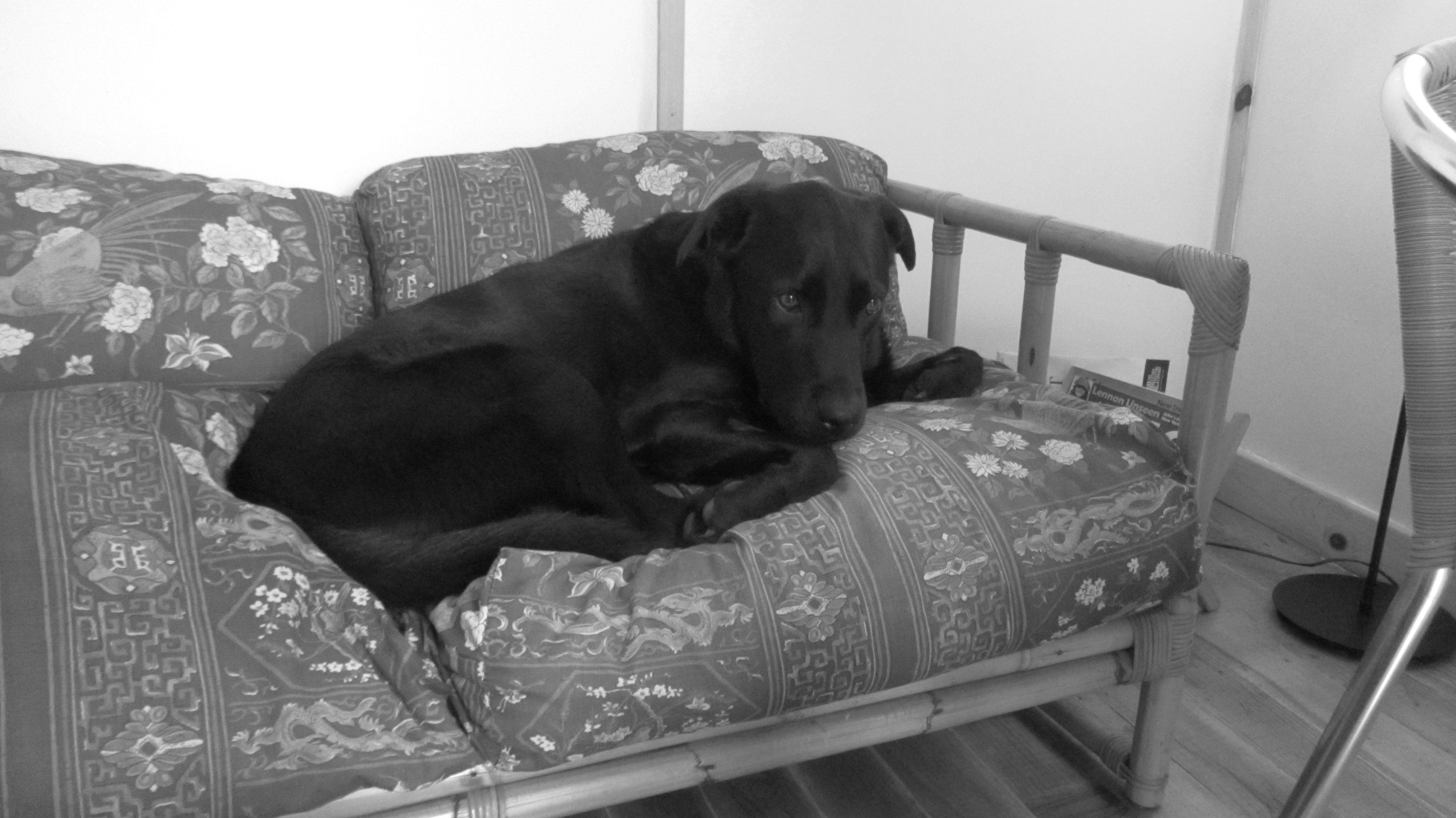
IMG_2525My desk is not so ordered as Murakami’s, but it is quite tidy. I am surrounded by things which I like. Pictures of Plath, a Morrissey coaster for my cups of tea, lamps, a Mark Rothko gallery of postcards, little boxes full of stationery that I love but never use, books, rugs, a sofa (always commandeered by my dog, George), a wicker chair to sit in, a kettle, a heater for cold days, candles. It is here that I write. When I get tired and need a break or want to read, I squeeze up on the sofa with George.

IMG_2527

Curiously, I always associate my writing shed with the beach. Partly because I live on the coast so the seagulls are a sonic backdrop to my day, but also because every morning before coming to work at my desk, I will have had either a run or walk on the beach with George, who then leaves piles of sand on the rugs and the sofa.

My shed used to be an old wash house at the start of the 20th century. It has a red brick chimney where the water would be heated, and it used to have a large sink. It may also have been used in the 1930s as a small poster printing space for a business that was run from the property. When I was younger (for I now own the house in which I was born) I used to think bears lived in the shed. It was a dark place with uneven, tilting slate tiles on the floor and a rickety wooden door. Sometimes it would be a den and there is still a faint trace on the outside wall where we once had a paint fight. I like these stories that emerge from just thinking about the place where I sit and work. People and lives before me, busy, making the place hum.

As I look up now from writing, a gold and black bee ambles across an orange flower outside the door and I think my stories are now becoming part of this place, my traces seeping into the very bricks. All of our rooms, where ever we are, a world – tangible, elusive but full of meaning.

IMG_2524

Crossing The Atlantic

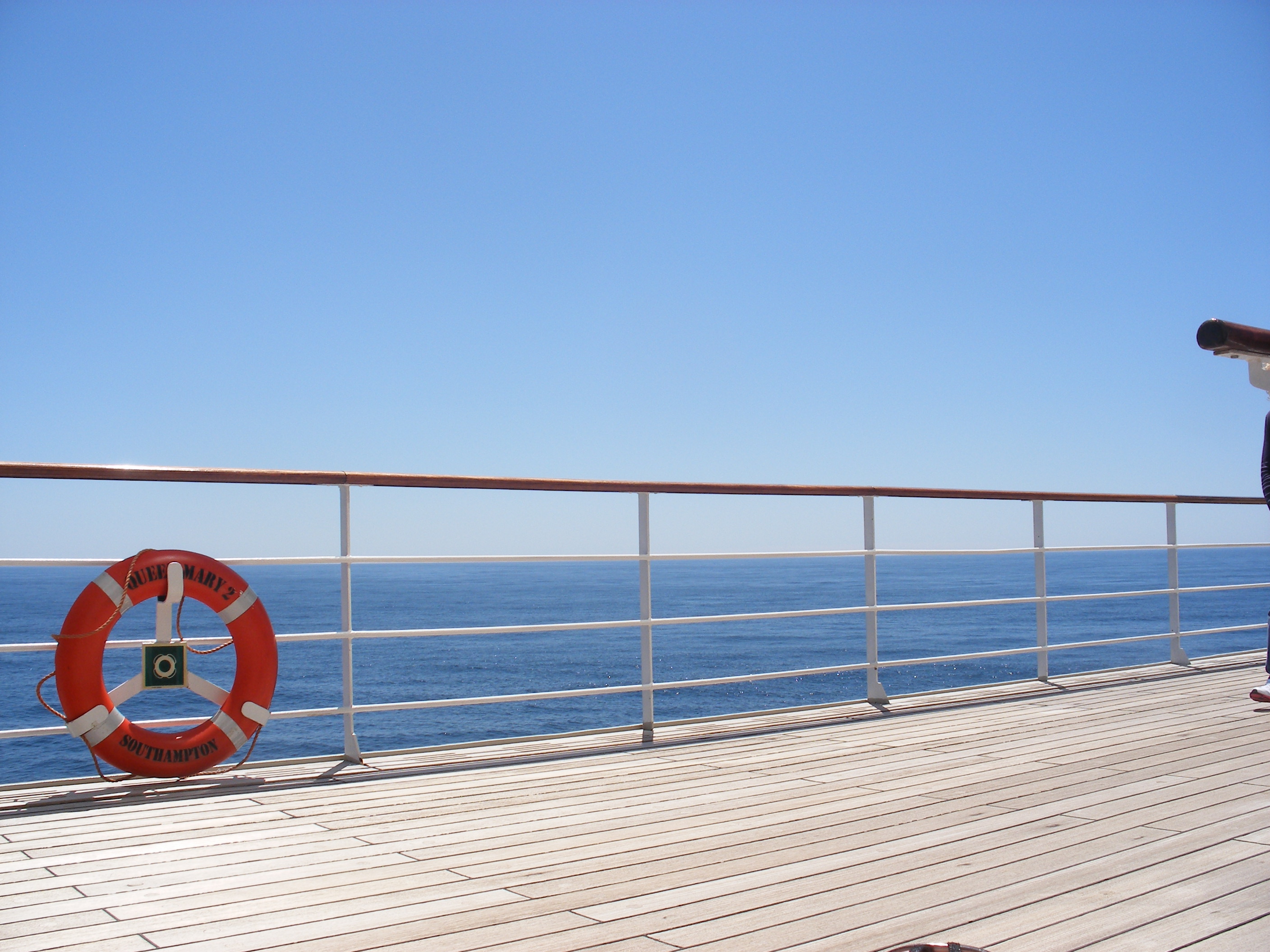
Four years ago today I left Southampton aboard the Queen Mary 2 bound for New York City.

DSCF0016-1 I was heading for a summer of Plathing, Bell Jar-ing around New York, then visiting Boston, Winthrop, Wellesley, Cape Cod, Martha’s Vineyard and a week working in the archives at Smith College, Northampton. Nursing a pathological fear of flying, sailing to America seemed the only option.

It was a great option.

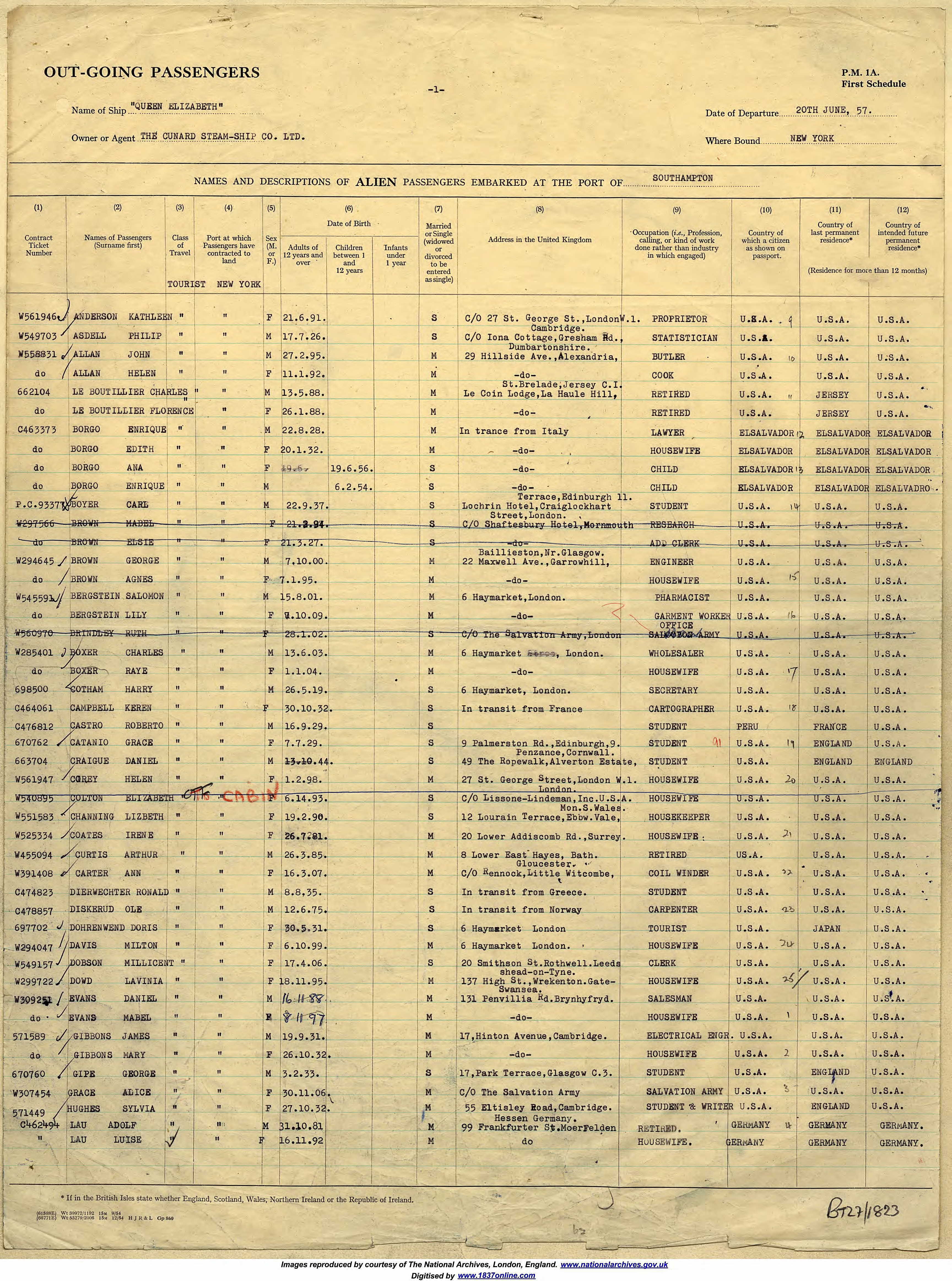
It was also not lost on me that this was the mode of transport that Plath used when crossing the Atlantic in 1955, 1957 and 1959.  Of course ocean liners get bigger and faster and while the crossing took Plath ten days, I was leaving one continent and landing on another within seven.

QE manifest 1957
Ship’s Manifest Queen Elizabeth

Spending a week at sea is a curious experience and I came to love and be utterly mesmerised by the lift and swell of that blue, like a giant infinity pool stretching out of sight.

DSCF0180

Occasionally, the surface would be broken by dolphins and whales, sometimes it would be totally obscured by a remarkable, thick, white fog that seemed to press right up against the cabin balcony so you could hear the ocean but not actually see it.

Sometimes, the waves got bigger and rougher and sitting low down in the ship you could feel them smack and bang and spray the windows.

New York day 2 003

The romance of transatlantic crossings is hard to resist. The lure of afternoon tea with harps playing, the evening balls and dancing, champagne cocktails and grand pianos, string quartets and jazz trios. Sometimes, poignancy strikes, as when we passed near to the resting place of The Titanic in the deep blue early hours of one morning.  But the days pass, and they pass quickly, staring at the ocean and lying on deck reading, taking tea, browsing the library and going to the theatre.

Plath’s experience was perhaps less enjoyable. On her return and final journey to England in December 1959 aboard the SS United States she was pregnant, taking two dramamine pills a day for sea sickness, reading Dr Zhivago and being kept awake by screaming, drunken girls at 3 and 4 in the morning. The food was only ‘so-so.’ With barely one night of clear skies and bright stars, the rest of the crossing was on a rolling and pitching liner with the decks shut off. Ship space, she lamented, was rather confined.

I arrived in New York City in the early hours of the morning. The QM2 has to time her arrival carefully otherwise her tall red funnels will not fit under the Verrazano bridge if the water is too high.

DSCF0300

The Statue of Liberty glowed like a green beacon and Manhattan rose into view like a startling mirage after seven days of nothingness. And thus began a queer, sultry summer; a summer in which I did know what I was doing in New York and it was spectacular.